
Thermal Mass Flow Meters
In the world of modern manufacturing, measuring gas flow accurately is essential for saving money and ensuring safety. A Thermal Mass Flow Meter is one of the most reliable tools used by engineers today to track how much gas is moving through a pipe. Unlike older technologies that only measure the volume of gas, these smart devices measure the actual mass. This means you get a precise reading of the quantity of gas molecules, which is what really matters for chemical reactions and fuel burning.
Choosing a high-quality Thermal Mass Flow Meter allows a factory to monitor its resources without needing extra sensors for pressure or temperature. This simplifies the entire system and reduces the chances of errors. Whether you are managing a large power plant or a small laboratory, understanding how these instruments work can help you improve your efficiency. As a leading Thermal Mass Flow Meter Manufacturer, we focus on providing robust solutions that stand up to the toughest industrial environments.
What is a Thermal Mass Flow Meter?
A Thermal Mass Flow Meter is a precision instrument designed to measure the mass flow rate of gases. Most traditional meters measure “actual” volume, which can change significantly if the gas gets hotter or if the pressure in the pipe increases. However, a thermal mass meter is different because it uses the cooling effect of flowing gas to determine its mass.
These meters are popular because they are “direct” meters. This means they do not require a separate computer to calculate the flow based on other variables. When an industry looks for a Gas Flow Meter for Industrial Use, they often choose thermal technology because it is highly sensitive, even when the gas is moving very slowly.
How Thermal Mass Flow Meter Works
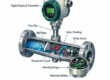
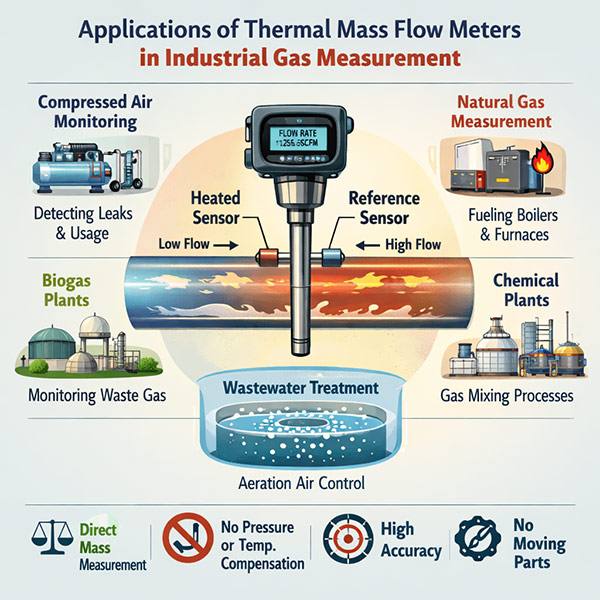
The working principle of a Thermal Mass Flow Meter is based on heat transfer. It typically features two sensors that are inserted into the gas stream. One sensor acts as a reference, measuring the temperature of the gas itself. The second sensor is heated to a specific temperature above the gas temperature.
As the gas flows past the heated sensor, it carries heat away. This is very similar to how a breeze feels cool on your skin on a hot day. The meter measures how much power is needed to keep that sensor at its set temperature.
- Low Flow: Less heat is carried away; less power is needed.
- High Flow: More heat is carried away; more power is needed.
Because the heat-carrying capacity of a gas is directly related to its mass, the meter can calculate the exact mass flow rate instantly.
Importance of Thermal Mass Flow Meter in Industrial Gas Measurement
In any industrial process, consistency is key. Using a Thermal Mass Flow Meter is important because it provides “Normalized” or “Standard” readings. In simple terms, it tells you how much gas is there regardless of whether the weather is hot or the pressure is fluctuating.
Thermal mass flow meters are widely used because they measure gas flow directly using heat transfer principles and do not require pressure or temperature correction. This saves industries from buying expensive secondary equipment like pressure transmitters and temperature probes. It also reduces the number of holes that need to be drilled into the process piping.
Applications of Thermal Mass Flow Meters in Industrial Gas Measurement
The versatility of the Thermal Mass Flow Meter makes it a favorite across many sectors. Here are the most common ways these meters are used:
- Compressed Air Monitoring: Compressed air is one of the most expensive “utilities” in a factory. Meters help detect leaks and track how much air each department uses.
- Natural Gas Measurement: Factories use these meters to monitor the fuel going into boilers and furnaces to ensure they are burning gas efficiently.
- Biogas Plants: Measuring gas produced from waste is tricky because the flow can be very low. Thermal meters are perfect for this.
- Chemical Plants: Precise gas mixing is required for chemical reactions. A Thermal Mass Flow Meter ensures the right amount of gas is added every time.
- Wastewater Treatment Plants: Large blowers pump air into water to help bacteria clean it. Measuring this “aeration air” helps save massive amounts of electricity.
Industrial Gases and Their Applications
| Gas Type | Industry | Application | Benefit of Thermal Mass Flow Meter |
|---|---|---|---|
| Nitrogen | Pharmaceutical | Tank Blanketing | Prevents oxygen from spoiling medicine; high sensitivity. |
| Argon | Steel Industry | Shielding Gas | Prevents oxidation during welding; measures low flows. |
| Natural Gas | Power & Energy | Combustion Control | Improves burner efficiency; no pressure drop. |
| Compressed Air | Manufacturing | Leak Detection | Saves energy costs by finding hidden leaks. |
| Oxygen | Healthcare | Medical Gas Supply | Accurate delivery for patient safety; clean design. |
| Carbon Dioxide | Food & Beverage | Carbonation | Consistent bubbles in drinks; high repeatability. |
Industries Using Thermal Mass Flow Meters
As a prominent Thermal Mass Flow Meter Supplier, we see these devices used in almost every corner of the industrial world.
- Steel Industry: Used to monitor oxygen and fuel gas for blast furnaces.
- Pharmaceutical Industry: Essential for maintaining sterile environments through nitrogen purging.
- Semiconductor Manufacturing: Used in cleanrooms where ultra-precise gas flow is needed for making microchips.
- Food Processing: Monitoring gases used for packaging to extend the shelf life of snacks.
- Automotive: Used in paint booths to control the air-fuel ratio for high-quality finishes.
Benefits of Using Thermal Mass Flow Meter
Why should you choose this technology over others?
- Direct Mass Flow: No need for extra math or sensors to find the mass.
- No Moving Parts: Because nothing spins or moves, there is very little wear and tear.
- High Turndown Ratio: It can measure very small flows and very large flows with the same device.
- Low Pressure Drop: The meter doesn’t block the gas flow, so you don’t lose energy moving gas through it.
- Easy Installation: Insertion-type meters can be installed in large pipes without stopping the flow (Hot Tapping).
Thermal Mass Flow Meter Manufacturer and Supplier in Ahmedabad
Ahmedabad is the industrial heart of Gujarat, home to thousands of chemical, textile, and engineering units. The local demand for precision instruments is growing every day. Choosing a Thermal Mass Flow Meter Manufacturer in Ahmedabad offers several advantages to local businesses:
- Quick Support: If you need a technician, a local team can reach your site within hours.
- Custom Calibration: We provide specialized calibration services based on the specific gas mixture used in your factory.
- Local Expertise: We understand the environmental conditions in Gujarat—such as high ambient temperatures—and build our meters to handle them.
- Industrial Installation: We offer on-site setup to ensure your Thermal Mass Flow Meter in Ahmedabad is positioned correctly for the best accuracy.
Buying from a local Thermal Mass Flow Meter Supplier also means lower shipping costs and the ability to visit the factory to see the quality of the products firsthand.
How to Choose the Right Thermal Mass Flow Meter for Industry
Selecting the right meter is vital for getting accurate data. Follow these steps:
- Identify the Gas: Different gases carry heat differently. Ensure the meter is calibrated for your specific gas (e.g., Oxygen vs. Nitrogen).
- Check Pipe Size: For small pipes (under 2 inches), an “In-line” meter is best. For large ducts, an “Insertion” meter is more cost-effective.
- Flow Range: Determine your minimum and maximum expected flow. Make sure the meter’s range covers both.
- Environmental Conditions: If the meter is outdoors or in a hazardous area, look for “Weatherproof” or “Explosion-proof” ratings.
- Output Requirements: Do you need a digital display, or do you want the data sent to a central PLC system (4-20mA or Modbus)?
Future of Industrial Gas Flow Measurement Technology
The future is “Smart.” By 2026, we are seeing a major shift toward IoT-enabled gas meters. These new devices can send flow data directly to your smartphone or a cloud system. This allows managers to monitor gas usage from anywhere in the world.
Predictive maintenance is also becoming a standard feature. Future meters will be able to tell the operator when they need cleaning before they start giving wrong readings. As a leading Thermal Mass Flow Meter Manufacturer, we are already integrating these digital features into our latest models.
Maintenance Tips for Thermal Mass Flow Meters
To keep your meter running for years, follow these simple tips:
- Keep it Clean: If you are measuring “dirty” gas with moisture or dust, inspect the sensor every 6 months for buildup.
- Use Mild Solvents: If there is grease on the sensor, clean it gently with an approved industrial solvent and a soft brush.
- Periodic Calibration: Even the best meters should be re-calibrated every 1–2 years to ensure they remain within their accuracy limits.
- Check Gaskets: When reinstalling a meter, always use new gaskets to prevent gas leaks.
Frequently Asked Questions (FAQs)
- What is a thermal mass flow meter used for?
It is used to measure the mass of gases like air, nitrogen, and natural gas in industrial pipelines for billing, process control, and leak detection.
- Which gases can thermal mass flow meters measure?
They can measure almost any clean gas, including Air, Nitrogen, Oxygen, Argon, CO2, Methane, and Biogas.
- Why are thermal mass flow meters used for industrial gas measurement?
They are preferred because they measure mass directly without needing extra sensors for pressure or temperature, making them more accurate and cost-effective.
- Can they measure liquid flow?
No, thermal mass flow meters are primarily designed for gas flow measurement. For liquids, other technologies like Magnetic or Ultrasonic meters are better.
- Who is the best thermal mass flow meter manufacturer in Ahmedabad?
Local manufacturers who offer custom calibration, on-site installation, and quick after-sales service are considered the best for Gujarat’s industries.
- Do these meters have moving parts?
No, they have no moving parts, which means they require very little maintenance and have a long lifespan.
- Is a thermal mass flow meter accurate for low flow?
Yes, thermal technology is exceptionally good at detecting very low gas velocities that other meters might miss.
- What is the difference between an insertion and an in-line meter?
In-line meters are built into a pipe section for small diameters. Insertion meters are long probes that “insert” into existing large pipes.
- How often should I calibrate my gas flow meter?
It is recommended to calibrate the meter every 12 to 24 months depending on the criticality of the process.
- Does gas moisture affect the reading?
Yes, moisture can change the heat transfer rate. It is best to use these meters with dry gases or use a specialized design for wet gas applications.