
Applications of Ultrasonic Level Transmitters in Tank Monitoring
In modern industries, keeping track of how much liquid is inside a storage tank is incredibly important. Whether a factory stores clean drinking water, dangerous chemicals, or thick wastewater, managers need to know exactly how full or empty their tanks are at all times. This is where an Ultrasonic Level Transmitter becomes an essential tool. By using sound waves to measure the distance from the top of the tank to the liquid surface, this smart device gives highly accurate readings without ever touching the liquid itself.
Without proper tracking, a factory might face dangerous spills, expensive material waste, or unexpected shutdowns. In the past, workers had to climb up tall tanks to check levels with a measuring stick or tape. This method was not only slow but also very unsafe. Today, an industrial level measurement sensor automates this entire process. It constantly watches the liquid level and sends real-time data straight to a factory’s control room, ensuring operations run smoothly and safely.
In this article, we will explore the many real-world applications of ultrasonic level sensors for tanks. We will look at why industries are moving away from manual checks, the unique benefits of non-contact measurement, and how modern automation makes factories much safer. Whether you run a large water treatment plant or a local chemical factory, understanding this technology is the first step toward better, more efficient tank management.
Growing Importance of Tank Level Monitoring in Industrial Facilities
Industries all over the world depend heavily on large tanks to store essential liquids. These liquids can range from everyday drinking water and cooking oils to harsh chemicals and industrial wastewater. Knowing exactly how much liquid is in these tanks is not just a matter of convenience; it is a critical part of running a safe and profitable business.
Accurate tank monitoring helps factories in several major ways. First, it prevents dangerous overflows. If a tank fills up too much and spills, it can damage equipment, harm the environment, and cause serious injuries to workers. Second, constant monitoring helps detect unexpected drops in liquid levels, which often points to a hidden leak. Finally, knowing exactly what is in stock prevents production loss. A factory cannot afford to stop making its products simply because it unexpectedly ran out of a raw material. A reliable tank level monitoring system ensures that reordering happens exactly when it should.
Limitations of Manual Tank Level Checking Methods
Before modern digital sensors were invented, factory workers had to measure tank levels by hand. They would often climb to the top of a tank and lower a long dipstick or a weighted tape measure into the liquid. Today, industries are replacing these manual methods because they cause several serious problems:
- Inaccurate readings: Human error is very common. A worker might misread the tape, or the liquid might be splashing, making it very hard to get a correct measurement.
- Safety risks: Climbing tall, slippery tanks is dangerous. Workers are at risk of falling, or they might inhale toxic fumes when they open the top hatch of a chemical tank.
- Delayed monitoring: Manual checks only tell you the level at the exact moment you check it. If a leak happens right after the worker leaves, nobody will know until the next scheduled check.
- Operational inefficiency: Paying a team of workers to walk around a massive factory checking dozens of tanks takes a lot of time and money that could be spent on more important tasks.
An ultrasonic level transmitter easily solves all of these issues by working automatically, 24 hours a day, keeping workers safely on the ground.
Why Non-Contact Level Measurement is Ideal for Storage Tanks
One of the best features of an ultrasonic level transmitter is that it is a “non-contact” device. This means the sensor is installed at the very top of the tank and uses sound waves to “see” the liquid below. The sensor itself never actually touches the liquid. This is incredibly important for modern industries.
When dealing with corrosive chemicals (like strong acids), thick wastewater, or liquids kept at very high temperatures, traditional sensors that touch the liquid can quickly melt, rust, or get clogged. Non-contact measurement is the ideal solution for these tough environments.
The main benefits of non-contact measurement include:
- No direct contact with liquid: The sensor stays perfectly clean and safe above the fluid.
- Minimal sensor wear: Because it does not touch harsh chemicals or sticky liquids, the device lasts much longer.
- High measurement reliability: Without sticky buildup or rust ruining the sensor, the readings stay highly accurate over time.
- Safe operation: Workers do not need to clean or replace the sensor often, which keeps them out of dangerous situations.
Industrial Applications of Ultrasonic Level Transmitters in Tank Monitoring
Ultrasonic sensors are incredibly versatile. Different industries use them to solve unique problems. Here are some of the most common industrial applications:
Common Tank Types Where Ultrasonic Level Transmitters Are Installed
Not all storage tanks look the same. Fortunately, an ultrasonic level transmitter can adapt to many different designs and shapes.
- Vertical Storage Tanks: These are the tall, cylinder-shaped tanks seen outside factories. Ultrasonic sensors are mounted exactly in the center of the roof to shoot sound waves straight down.
- Underground Tanks: Used often for fuel or water, these tanks are buried to save space. Sensors are placed in the access shafts to keep track of hidden liquid levels.
- Open Reservoirs: Even in open-air concrete pits or water basins, an ultrasonic sensor can be hung on a simple metal bracket above the water to monitor the depth.
- Process Tanks: These are active tanks where liquids are constantly flowing in and out. Ultrasonic sensors react very quickly to these fast-changing levels.
- Mixing Tanks: Used in food and chemical plants to stir liquids together. As long as the mixing blades don’t block the sound waves, the sensor can read the liquid level even while it is spinning.
Improving Process Automation Using Ultrasonic Level Transmitters
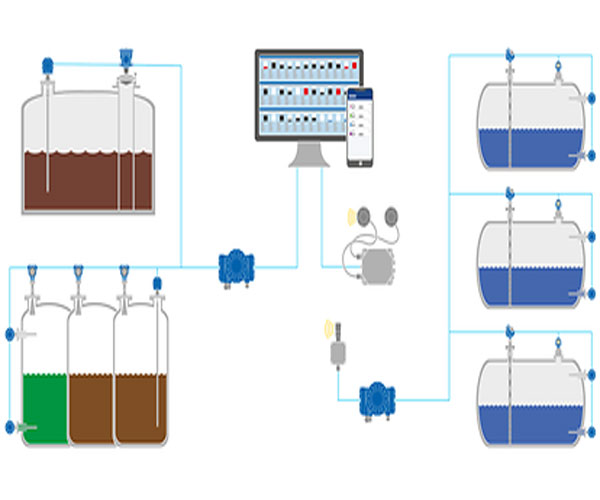
Modern factories operate smartly. They do not just collect data; they use that data to control machines automatically. An ultrasonic level transmitter is a key piece of this puzzle.
These sensors easily connect to modern industrial automation systems:
- SCADA Monitoring Systems: SCADA is a computer system that lets managers view the entire factory on a big screen. The sensors send constant updates, so a manager can see the exact fill percentage of every tank in real-time.
- PLC Control Systems: A Programmable Logic Controller (PLC) is a factory computer. When the ultrasonic sensor tells the PLC that a tank is 90% full, the PLC can automatically turn off the intake pump to prevent a spill.
- Industrial Automation Platforms: By linking sensors to the cloud, factory owners can check their tank levels on their smartphones from anywhere in the world.
This high level of connectivity improves process efficiency, saves electricity, and ensures that pumps and valves only operate exactly when needed.
Ultrasonic Level Transmitter Manufacturer and Supplier in Ahmedabad
Gujarat is one of the largest industrial hubs in India. With thousands of chemical factories, textile mills, and pharmaceutical plants, the demand for reliable instruments is huge. Finding a trusted Ultrasonic Level Transmitter Manufacturer and Ultrasonic Level Transmitter Supplier right here in Ahmedabad offers major advantages for local businesses.
Working with a local supplier in Ahmedabad means factories get their equipment delivered much faster without waiting for overseas shipping. It also makes a big difference for after-sales support. A local manufacturer understands the specific challenges of the Gujarat climate and industrial demands. They can provide fast, on-site installation, quick repair services, and proper calibration services. If an Ultrasonic Level Transmitter in Ahmedabad needs maintenance, local experts can reach the factory in hours instead of weeks, keeping production running smoothly
Comparing Ultrasonic Level Transmitter with Other Tank Level Sensors
When choosing an industrial level measurement sensor, factories often compare different technologies. Here is how an ultrasonic sensor compares to older float sensors and more expensive radar sensors.
| Parameter | Ultrasonic Level Transmitter | Float Level Sensor | Radar Level Sensor |
|---|---|---|---|
| Measurement Accuracy | High accuracy | Moderate accuracy | Very High accuracy |
| Maintenance Requirements | Very Low (Non-contact) | High (Moving parts get stuck) | Very Low (Non-contact) |
| Installation Complexity | Simple | Simple to Moderate | Complex |
| Cost Efficiency | Highly cost-effective | Very cheap | Very expensive |
| Reliability in Harsh Environments | Great for most liquids | Poor (Corrodes easily) | Excellent for extreme steam/dust |
Best Practices for Installing Ultrasonic Level Transmitters in Tanks
To get the most accurate readings, an ultrasonic level transmitter must be installed correctly. Even the smartest sensor will fail if it is put in the wrong spot. Here are some simple, practical guidelines:
- Sensor Placement: Always mount the sensor perfectly straight and level at the top of the tank. The sound waves must hit the liquid surface at a perfectly flat angle to bounce straight back.
- Avoiding Obstructions: Keep the sensor away from the sides of the tank. Do not mount it directly above pipes, ladders, or mixing blades. The sound waves will hit these objects instead of the liquid, causing false readings.
- Selecting Correct Measuring Range: Every sensor has a “dead band” or blind spot right below its face. Ensure the maximum liquid level never touches the sensor itself. Also, buy a sensor strong enough to reach the bottom of your specific tank.
Calibration Considerations: Always program the sensor with the exact height of the tank. This ensures the 0% and 100% full marks are completely accurate.
Tank Monitoring Applications Summary
| Industry | Tank Type | Liquid Type | Monitoring Benefit |
|---|---|---|---|
| Water Treatment | Storage Tank | Treated Water | Continuous level monitoring to control supply pumps |
| Chemical Industry | Chemical Tank | Acid / Solvent | Safe level detection without touching hazardous fluids |
| Food Processing | Mixing Tank | Liquid Ingredients | Process control for accurate recipe mixing |
| Oil & Gas | Underground Tank | Diesel Fuel | Prevents fuel shortages for backup generators |
| Pharmaceuticals | Process Tank | Purified Water | Hygienic tracking without risk of contamination |
FAQ’s
It is an industrial device that uses sound waves to measure the distance from the top of a tank to the liquid inside. It calculates how full the tank is without ever touching the liquid.
The system uses sensors (like ultrasonic transmitters) to measure liquid levels. It then sends this data digitally to a computer or control room so operators can watch the tank levels in real-time.
Non-contact measurement is much safer because workers do not have to climb tanks. It is also much more accurate and provides continuous data 24 hours a day, unlike manual stick measurements.
Yes. Because the sensor is mounted above the liquid and never touches it, it is perfect for measuring strong acids and corrosive solvents without getting damaged.
The dead band is a small blind spot right directly under the sensor. The liquid should not enter this small zone, or the sensor will not be able to read the level correctly.
Yes, modern ultrasonic transmitters easily connect to PLCs and SCADA systems, allowing factories to automate their pumps and valves based on the liquid level.
Ahmedabad has several top-tier industrial instrumentation companies. Working with a local supplier in Gujarat ensures fast delivery, easy installation, and quick calibration support.
Thick foam can sometimes absorb the sound waves and cause reading errors. In tanks with very heavy foam, special adjustments or a different sensor type like radar might be recommended.
Maintenance is very low. You usually just need to keep the face of the sensor clear of heavy dust or condensation and occasionally check the digital calibration.
They can be used on almost any tank, including vertical storage tanks, underground fuel tanks, open water reservoirs, and indoor chemical mixing tanks.
CONCLUSION
Managing industrial liquids safely and efficiently is a top priority for modern factories. As we have explored, an Ultrasonic Level Transmitter is a powerful tool that easily replaces slow, dangerous manual checking methods. By using non-contact sound wave technology, these industrial level measurement sensors provide highly accurate readings without suffering from wear and tear, even when measuring harsh chemicals or dirty wastewater.
By upgrading to a smart tank level monitoring system, factory owners can prevent dangerous spills, spot hidden leaks, and connect their tanks directly to automated control rooms. Whether you are running a water treatment facility or searching for a trusted local manufacturer in Ahmedabad, investing in ultrasonic technology is a guaranteed way to improve your operational safety, boost factory automation, and save money in the long run.