
Maintain pH ORP Meters for Accurate Readings
In the industrial world, water isn’t just a liquid; it is a critical raw material. Whether you are treating wastewater, manufacturing chemicals, or processing food, the chemical balance of your liquids must be perfect. To keep everything running smoothly, engineers rely on a Ph ORP Meter. This device tells you two very important things: how acidic or basic a liquid is (pH) and its ability to act as an oxidizing or reducing agent (ORP).
However, even the most expensive industrial pH meter can give wrong data if it isn’t cared for properly. Imagine a chef using a thermometer that is off by ten degrees; the food would be ruined. The same applies to industries. Incorrect readings can lead to bad product quality, damaged equipment, and even safety risks. Maintaining your water quality monitoring instrument is the only way to ensure your process stays under control and your business remains profitable.
What is a Ph ORP Meter?
- pH Value: This tells you if the liquid is acidic (like vinegar) or alkaline (like soap). It is measured on a scale of 0 to 14.
- Oxidation-Reduction Potential (ORP): This measures the “sanitization” strength or the cleanliness of the water. It tells you if the water has the power to break down contaminants.
- Usage: You will find an online pH ORP meter in water treatment plants, chemical factories, and pharmaceutical labs where 24/7 monitoring is required.
- Importance: It is the primary tool for process control, ensuring that chemicals are added in the right amounts to achieve a perfect product.
Why Proper Maintenance of Ph ORP Meters is Important
Common Problems in Ph ORP Meters
• Unstable Readings: Often caused by a dirty sensor, air bubbles trapped around the electrode, or electrical interference from nearby heavy motors.
• Slow Sensor Response: Usually a sign of a “clogged” sensor tip or a sensor that has been left dry for too long.
• Calibration Issues: If the meter won’t match the buffer solution, the buffer might be old, or the sensor might be dead.
• Sensor Coating Buildup: In wastewater, fats and oils can create a “skin” over the sensor, blocking the reading.
• Display Errors: These are usually electronic issues within the main unit rather than the sensor itself.
• Wiring Problems: Cracked cables can allow moisture to enter the wire, which destroys the signal.
How to Maintain Ph ORP Meters for Accurate Readings
Clean Electrodes Regularly
The biggest enemy of a sensor is “buildup.” Over time, minerals, oils, and chemical deposits can coat the glass tip. If the sensor is covered in grime, it cannot “feel” the liquid correctly.
- Cleaning Tip: Use a soft brush or a specialized cleaning solution provided by your Ph ORP Meter Manufacturer. Never use your fingernails or a rough cloth, as scratches on the glass bulb will ruin the accuracy.
Calibrate the Meter Frequently
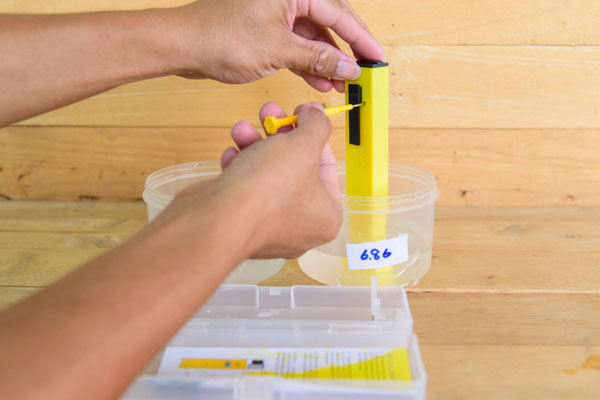
All meters “drift” over time due to temperature changes and electronic aging. ORP sensor calibration and pH calibration reset the meter to a known standard.
- The Process: Dip your sensors into standard buffer solutions (usually pH 4, 7, and 10). The meter adjusts itself to match these known values. For ORP, use a standard solution like Quinhydrone.
Store Sensors Correctly
This is a very common mistake. You must never store a pH or ORP electrode in distilled water, and you should never let it stay dry.
- The Secret: Use a specific storage solution (usually 3M KCl). Keeping the sensor tip moist keeps the internal chemistry active and ready for the next reading.
Check Sensor Response Time
When you put a sensor into a new liquid, it should reach a stable number quickly. If the display takes a very long time to stop moving, it is a sign that the sensor is either dirty or reaching the end of its life.
Inspect Cables and Connectors
In a factory, vibrations and moisture can loosen wires. An online pH ORP meter relies on tiny electrical signals. If a connection is loose or rusty, the signal gets “noisy,” and your readings will jump around or look incorrect.
Replace Old Sensors on Time
Even with perfect care, sensors age. Most industrial electrodes last between 6 to 18 months. If your meter won’t calibrate even after a deep cleaning, it is time to order a new part from your manufacturer.
Follow Scheduled Maintenance
Don’t wait for the machine to break. Create a calendar for weekly cleaning and monthly calibration. Regular servicing is the only way to catch small problems before they become big disasters.
Daily vs. Monthly Maintenance Checklist
| Maintenance Task | Daily Check | Monthly Check |
| Visual Inspection for Leaks | Yes | Yes |
| Cleaning Sensors | If needed | Yes (Deep Clean) |
| Calibration Check | Yes | Required |
| Check Cable Integrity | No | Yes |
| Buffer Solution Freshness | Yes | Yes |
| Storage Solution Level | Yes | Yes |
| Inspect for Cracks/Damage | No | Yes |
Industries Using Ph ORP Meters
- Water Treatment Plants: To ensure tap water is safe and properly disinfected.
- Chemical Industries: To monitor reactions that only happen at specific pH levels.
- Pharmaceutical Companies: To keep medicine production perfectly sterile and balanced.
- Food and Beverage Industries: To ensure the taste and safety of sodas, juices, and dairy.
- Swimming Pools: To balance chlorine and acid levels for swimmer safety.
- Wastewater Systems: To treat dirty water before it is released back into the environment.
Tips to Improve Ph ORP Meter Accuracy
1. Use Fresh Calibration Solutions: Once a bottle of buffer solution is opened, it starts to change because of the air. Never pour used solution back into the bottle!
2. Avoid Sensor Contamination: When moving the sensor from one liquid to another, always rinse it with distilled water. This prevents “carrying over” chemicals that could mess up the next reading.
3. Maintain Proper Operating Temperature: pH readings change with heat. Ensure your meter has “Automatic Temperature Compensation” (ATC) or that you are measuring at a stable temperature.
Signs Your Ph ORP Meter Needs Service
- Incorrect Readings: The meter says pH 7, but your manual test kit says pH 5.
- Frequent Calibration Failure: You have to calibrate the meter every few hours just to get a stable number.
- Sensor Drift: The reading slowly changes even when the liquid is staying the same.
- Physical Sensor Damage: Any cracks in the glass bulb or the plastic body.
- Slow Display Updates: The numbers on the screen take forever to change or look “frozen.”
FAQs
It measures the acidity/alkalinity (pH) and the disinfection/chemical power (ORP) of a liquid. It is used to control chemical processes and ensure water safety.
In most industrial settings, once a week is a good rule. However, if your process is very sensitive, you should check it every day.
Unstable readings are usually caused by a dirty electrode, air bubbles, or electrical noise from other machines near the online pH ORP meter.
They should be soaked in a specialized cleaning solution or mild soap and water, then gently rinsed. Avoid scrubbing the tip with anything hard.
Most industrial electrodes last about a year. If they become slow or won’t calibrate correctly, they need to be replaced.
Clean the sensor regularly, use fresh calibration buffers, and make sure the sensor stays wet when not in use.
Conclusion
A Ph ORP Meter is a powerful tool, but it is only as good as the person maintaining it. By following a simple schedule of cleaning, calibration, and proper storage, you can ensure that your water quality monitoring instrument gives you the right data every time. This leads to less waste, better products, and a safer working environment.
Don’t wait for your meter to fail and ruin a batch of product. Start a maintenance routine today and get the most out of your industrial equipment.