Managing water resources has become a top priority for industries and municipal bodies across India. As we face increasing water scarcity, the need for precise measurement has never been higher. The Ultrasonic Flow Meter has emerged as the most reliable tool for tracking water usage without disrupting operations. Whether it is for a massive treatment plant or a small industrial unit, these meters provide the data needed to stop wastage and improve efficiency.
In modern engineering, shifting toward digital and non-intrusive technology is the only way to ensure long-term sustainability. An Ultrasonic Flow Meter offers a high-tech solution that traditional mechanical meters simply cannot match. It uses sound waves to calculate flow velocity, making it an essential component for any modern fluid management strategy. By choosing this technology, businesses in Gujarat and beyond are securing their infrastructure against the rising costs of water loss.
For any facility manager, the goal is to have a system that works silently and accurately in the background. The Ultrasonic Flow Meter fulfills this role by providing real-time data that helps in decision-making. From monitoring clean drinking water to managing thick wastewater, these meters are versatile enough to handle diverse liquid types. This article explores why this technology is the future of water management and how it solves the common headaches of traditional plumbing systems.
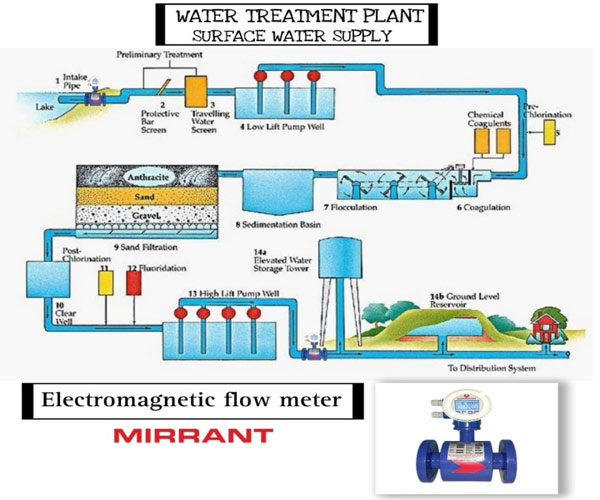
Rising Demand for Smart Water Monitoring in Modern Cities
Modern cities are growing faster than ever, and this rapid expansion puts a massive strain on existing water networks. In cities like Ahmedabad, where industrial hubs and residential zones coexist, the demand for “Smart Water” is no longer a luxury—it is a necessity. Traditional methods of checking water levels or flow rates manually are prone to human error and are often too slow to catch problems like major pipe bursts.
This is where the Ultrasonic Flow Meter technology steps in. Smart water monitoring involves using sensors that can talk to a central computer system. Because ultrasonic meters are electronic, they can easily send data to a mobile app or a control room. This allows city engineers to see exactly how much water is moving through the pipes at any given second.
Industries also require this high level of accuracy to meet environmental regulations. Every drop of water used in a factory costs money, both in terms of procurement and disposal. By using an Ultrasonic Flow Meter, companies can optimize their processes, ensuring they only use what is necessary. This efficiency helps manage water resources for the entire community, ensuring that growth doesn’t lead to a dry future.
Challenges Faced in Wastewater Monitoring Systems
Wastewater is much harder to measure than clean water. It often contains debris, chemicals, and solid waste that can destroy standard equipment. Traditional flow meters that have moving parts inside the pipe frequently fail in these harsh conditions. Here are the primary challenges faced by water plants today:
- Pipeline Leakage: Small leaks underground can go unnoticed for months, wasting thousands of liters and causing soil erosion.
- Inaccurate Flow Readings: Over time, mechanical meters wear out, leading to wrong data that can ruin chemical treatment processes in a plant.
- Maintenance Issues: To fix a traditional meter, you often have to shut down the entire water line, which stops production or cuts off the city’s supply.
- Pressure Loss: Anything placed inside a pipe creates a “bottleneck,” which slows down the water and forces pumps to work harder, consuming more electricity.
- Scaling and Corrosion: In wastewater, minerals and chemicals build up on internal sensors, eventually making them stop working entirely.
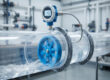
The Ultrasonic Flow Meter overcomes these challenges because it is often “clamp-on.” This means the sensors sit on the outside of the pipe. There is nothing inside the pipe to get corroded or blocked. It detects leaks by identifying even the smallest changes in flow velocity, and because it doesn’t obstruct the water, there is zero pressure loss and no need to cut the pipes for maintenance.
Key Benefits of Ultrasonic Flow Meters in Water and Wastewater Monitoring
Switching to ultrasonic technology provides immediate advantages for both the budget and the engineering team. Below are the key benefits:
Non-intrusive measurement
No pipeline modification required
High accuracy for clean and dirty water
No pressure drop
Ideal for large pipelines
Low maintenance
Water Infrastructure Areas Where Ultrasonic Flow Meter is Most Useful
The versatility of this device makes it a favorite across various sectors. Here is where you will most commonly find an Industrial Water Flow Meter in action:
- Municipal Water Supply Networks: Used to track how much water is being sent to different neighborhoods to ensure fair distribution.
- Wastewater Treatment Plants (STP/ETP): Essential for measuring the “influent” (incoming waste) and “effluent” (treated water) to meet pollution control board standards.
- Industrial Water Management: Factories use them to monitor boiler feed water, cooling towers, and process water.
- Irrigation Monitoring Systems: Large farms and government canals use them to manage the water sent to crops.
- Cooling Water Pipelines: Power plants and data centers use them to ensure their cooling systems never run dry.
- Pumping Stations: To check if pumps are performing at their rated capacity or if they are losing efficiency.
Monitoring Benefits by Facility Type
| Facility Type | Monitoring Purpose | Why Ultrasonic Flow Meter is Ideal | Operational Benefit |
| City Water Works | Bulk supply tracking | Fits large diameter pipes easily | Reduces Non-Revenue Water (NRW) |
| Chemical Factory | Corrosive liquid flow | Sensors don’t touch the liquid | No equipment damage from chemicals |
| STP Plants | Sludge flow monitoring | Unaffected by solid particles | Accurate billing and process control |
| High-Rise Buildings | Overhead tank management | Compact and easy to retrofit | Prevents tank overflows and wastage |
Role of Ultrasonic Flow Meters in Reducing Water Loss
Non-Revenue Water (NRW) is the term used for water that is produced but “lost” before it reaches the customer. This happens due to leaks, theft, or poor metering. In many Indian cities, NRW can be as high as 30% to 50%. This is a massive financial loss for the government and a waste of a precious resource.
The Ultrasonic Flow Meter is the best weapon against NRW. Because these meters can detect very low flow velocities, they can spot a tiny leak in the middle of the night when water usage should be zero. By installing these meters at various points in a network, engineers can perform “zonal balancing.” If 1000 liters enter a zone but only 800 are accounted for, the meter tells you exactly where to look for the leak. This proactive approach saves millions of liters every year.
Smart Water Management Systems Using Ultrasonic Flow Meter
We are moving toward an era of the “Internet of Pipes.” An Ultrasonic Flow Meter is a digital native, meaning it is built to work with modern technology:
- SCADA Systems: The meter feeds data directly into the Supervisory Control and Data Acquisition system, allowing a single operator to manage the entire city’s water from one screen.
- IoT Monitoring Systems: Using 4G or 5G SIM cards, the meter can send daily reports to a manager’s smartphone, alerting them if flow drops or stops.
Digital Water Management Platforms: Advanced software can analyze flow patterns over months to predict when a pipe might burst or when a pump needs servicing.
Comparing Ultrasonic Flow Meter with Mechanical Water Flow Meters
| Parameter | Ultrasonic Flow Meter | Mechanical Flow Meter |
| Accuracy | Very High (remains constant) | Medium (decreases as parts wear) |
| Maintenance | Almost Zero | Frequent (cleaning & lubrication) |
| Installation | Non-invasive (clamp-on) | Must cut pipe and stop flow |
| Lifespan | 10–15 years (no wear) | 3–5 years (moving parts break) |
| Pressure Loss | Zero | Significant (obstructs flow) |
Ultrasonic Flow Meter Manufacturer and Supplier in Ahmedabad
Ahmedabad is the industrial heart of Gujarat and a leading hub for instrumentation in India. Choosing a local Ultrasonic Flow Meter Manufacturer offers several key advantages:
- Industrial Demand in Gujarat: With massive GIDC estates in Vatva, Naroda, and Odhav, the local expertise in handling industrial fluids is unmatched.
- Role of Local Manufacturers: Local companies understand the specific challenges of Indian infrastructure, such as power fluctuations and high ambient temperatures.
- Benefits of Buying from Ahmedabad Suppliers: You get faster delivery, no heavy shipping costs, and most importantly, “on-site” support.
Installation and Calibration Support: An Ultrasonic Flow Meter Supplier in Ahmedabad can send a technician to your plant within hours for calibration, ensuring your readings are always 100% accurate.
Tips for Selecting the Right Ultrasonic Flow Meter for Water Monitoring
Choosing the right meter ensures you don’t overspend or get the wrong data. Consider these factors:
- Pipeline Diameter: Ensure the meter is rated for your pipe size, whether it’s a 1-inch pipe or a 40-inch main line.
- Fluid Type: Is it clean water, sewage, or chemical-heavy wastewater? This determines if you need a “Transit-time” or “Doppler” type meter.
- Temperature Range: Industrial water can be hot. Check the sensor limits.
- Installation Type: Choose “Clamp-on” for easy setup or “In-line” if you are building a new system from scratch.
- Digital Monitoring Compatibility: Ensure it has RS485, Modbus, or 4-20mA output to connect to your existing computers.
FAQ’s
It is used to measure the velocity and volume of liquids inside a pipe using ultrasound technology, commonly used in water supply and chemical processing.
Yes, specific versions called “Doppler” flow meters are designed exactly for dirty water, sludge, and liquids with bubbles or solids.
Both are very accurate, but the ultrasonic version is often preferred because it can be installed on the outside of the pipe without cutting it.
It uses high-strength metal straps and a special coupling gel to ensure the sound waves pass perfectly from the sensor through the pipe wall into the water.
No. One of the biggest benefits is that you can install a clamp-on Ultrasonic Flow Meter while the system is fully operational.
Yes, they work best on metal (Steel, Iron) and plastic (PVC, HDPE) pipes. The meter settings are adjusted based on the pipe material.
Since they are on the outside and have no moving parts, they can easily last over 10 years with minimal care.
Yes, there are specialized small-bore ultrasonic meters designed for pipes as small as half an inch.
Buying locally ensures you get genuine parts, GST-compliant invoicing, and expert technicians who can visit your site for setup and training.
Yes, by comparing flow rates at two different points in a pipeline, they can identify if water is being lost in between.
CONCLUSION
The transition to Ultrasonic Flow Meter technology represents a major step forward for the Indian industrial and municipal sectors. By eliminating the need to cut pipes and removing the risk of mechanical wear, these meters offer a cost-effective and highly accurate way to manage our most precious resource: water. Whether you are a factory owner in Gujarat looking to reduce costs or a city engineer aiming to modernize the water grid, this technology provides the data and reliability you need. Investing in high-quality flow monitoring today ensures a more sustainable and efficient tomorrow for our water infrastructure.