
How to Choose the Right Electromagnetic Flow Meter Materials
An electromagnetic flow meter needs a liner and electrodes that suit the liquid passing through it. Choose them by checking the liquid name, concentration, temperature, pressure and cleaning cycle. A meter that works well on fresh water may need different materials for a chemical blend or gritty wastewater.
The trouble often starts with a short enquiry. A buyer asks for a meter for acid, water or slurry, but these words leave out details that affect material life. The supplier may quote a standard option without knowing about hot cleaning, salt or sand.
This guide helps you turn those missing details into clear buying checks. Use it to compare liner options, ask better questions and get the selected materials written into your quotation before you place an order. It can reduce costly rework.
What the Liner and Electrodes Do Inside a Flow Meter
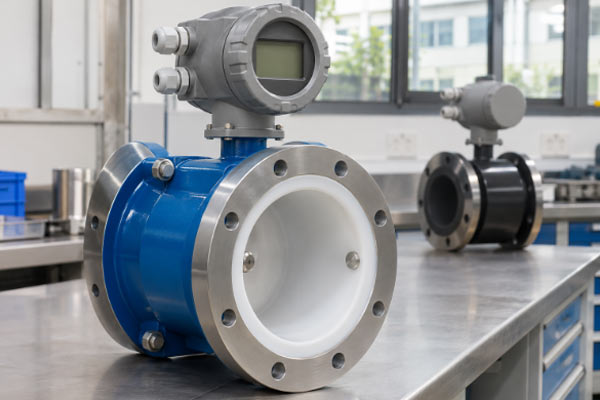
The liner covers the inside of the metal flow tube. It keeps the conductive liquid electrically separate from the tube and provides a surface suited to the process. Its condition matters for reliable measurement.
The measuring electrodes touch the liquid and pick up the small signal used to measure flow. Even if the liner handles the liquid well, an unsuitable electrode can still corrode or develop deposits.
Think of them as two separate choices. The liner needs suitable chemical and wear resistance. The electrodes need suitable metal compatibility and a surface that can keep good contact with the liquid. Both must work within the limits of the complete meter.
Start Electromagnetic Flow Meter Liner Selection With Fluid Details
Before asking for a price, prepare a short process sheet. Write down what actually flows through the pipe, including liquids used only during washing or product changes.
Send these details with your enquiry:
- Liquid name and chemical composition
- Concentration range and any mixed chemicals
- Minimum, normal and maximum temperature
- Normal pressure, peak pressure and possible vacuum
For example, “treated water” could describe several different conditions. Water with salt, cleaning chemical traces or fine sand needs a closer check than its name suggests.
If the liquid recipe changes, share the full ex
PTFE or Rubber Lining Which Should You Buy
Buyers often compare PTFE and rubber because the initial prices can differ. The useful question is which option fits the duty over its working life.
For a stable water application, an approved rubber liner may meet the need without paying for another material. For chemical transfer, a fluoropolymer liner may be worth evaluating. Neither choice should be made from the liquid name alone.
Picture a line that carries cool process water most of the day but receives a hot chemical wash each evening. Choosing only for the water misses the toughest part of the cycle. Ask the supplier to approve both duties in writing.
For a gritty liquid, chemical resistance alone is not enough. Share the solids content and flow range so the supplier can review wear as well as corrosion.
Compare Electromagnetic Flow Meter Liner Materials
Common electromagnetic flow meter liner materials include fluoropolymers, rubber compounds and polyurethane. The table below is a starting point for discussion. It is not a chemical approval chart, and every material may not be available in your chosen model.
| Liner Option | Why Buyers Consider It | What to Confirm Before Ordering |
|---|---|---|
| PTFE | Often considered for chemical service | Compatibility with the exact liquid, temperature and vacuum conditions |
| FEP | Another fluoropolymer option for suitable chemical duties | The specific meter construction and its process limits |
| PFA | Available in some models for demanding process conditions | Model availability, chemical suitability and pressure limits |
| Hard rubber | Commonly considered for suitable water and wastewater duties | Rubber compound, cleaning limits and chemical exposure |
| Polyurethane | Considered for some liquids containing abrasive particles | Particle conditions, chemical resistance and temperature limits |
Avoid treating a material name as a complete specification. Two meters with PTFE liners can have different allowed pressure and temperature ranges because their sizes and construction differ.
Likewise, “rubber lining” is too vague for a purchase order. Ask for the exact compound and its approved operating range. This helps prevent a lower cost quote from hiding a different material choice.
Check Temperature Pressure and Vacuum Together
A flange pressure class does not, by itself, prove that the liner is suitable for every process condition. Review the complete sensor rating at the highest and lowest expected temperatures.
Vacuum also deserves a separate question. Some lines can see low pressure while draining, cooling or during pump operation. Liner suitability depends on the design and support inside the selected meter.
Give the supplier a full operating picture. Include startup, shutdown, cleaning and unusual but expected conditions. Ask for the allowable pressure and temperature range for your exact size, liner and electrode combination.
Do not apply a temperature limit copied from another brand or another model. A familiar material name does not make the finished meters identical.
Solve Common Chemical Wastewater and Slurry Problems
Different applications place different demands on the same two parts.
| Process Problem | Information to Investigate | Useful Buying Response |
|---|---|---|
| Chemical attack | Concentration changes, mixtures and temperature | Obtain approval for every expected liquid |
| Grit wearing the bore | Particle size, hardness and flow conditions | Ask for a wear review and suitable liner options |
| Deposits covering electrodes | Sticky material, scale and cleaning method | Discuss electrode design, access and cleaning needs |
| Failure after washing | Cleaning chemical strength and temperature | Include the full cleaning cycle in material selection |
If a previous meter failed, send clear photographs and the old specification. Explain where the damage appeared and how long the meter had been running. This gives the supplier more useful evidence than a request for a tougher replacement.
Avoid choosing a new liner based only on colour or appearance. The visible damage needs to be assessed alongside the process history.
Include Grounding Parts Gaskets and Cleaning Requirements
Liners and measuring electrodes are only part of the material check. Grounding rings or other process contact parts may also touch the liquid. Their materials need approval too.
Ask the supplier to list all wetted parts, meaning every part in contact with the liquid. Include grounding components and any seals supplied with the meter. A suitable electrode does not protect an unsuitable grounding ring.
For cleaning, request the approved method before buying. Ask whether the sensor must be removed, how deposits should be cleared and which cleaners are allowed. Rough scraping can damage surfaces or parts inside the bore.
For food or other hygiene sensitive duties, ask for the required documents for the complete supplied configuration. A PTFE liner description alone does not prove that the full meter meets your site’s hygiene needs.
Check Conductivity Before Buying an Electromagnetic Flow Meter
An electromagnetic flow meter measures conductive liquids. Changing the liner or upgrading the electrodes will not make an unsuitable liquid meet the selected model’s conductivity requirement.
Share the lowest expected conductivity, especially if the process includes purified water or dilution. Ask the supplier to confirm the minimum value for the exact model and liquid conditions. There is no single limit that applies to every electromagnetic meter.
For a liquid that does not suit this method, discuss another measuring technology. Aranka’s flow meter comparison guide can help you frame that conversation.
Also remember that unstable readings do not always mean the material choice is wrong. Pipe fullness, grounding, air and wiring may need checks. Review the electromagnetic flow meter installation guide alongside the selected model’s manual.
Buying From an Electromagnetic Flow Meter Manufacturer in India
When choosing an electromagnetic flow meter manufacturer in India, look for a clear technical response before focusing on the discount. The supplier should explain the proposed materials, confirm the operating limits and identify any missing process details.
If you need an electromagnetic flow meter supplier in Gujarat, ask who will review the application and handle service queries after delivery. Confirm the support scope and response arrangements rather than assuming that location alone covers them.
Aranka Instruments LLP lists PTFE, FEP and hard rubber lining options, along with SS316, Hastelloy C, titanium and tantalum electrodes, on its electromagnetic flow meter product page. Ask which combinations are available and approved for your duty before ordering.
A Simple Buyer Example Before You Approve the Order
Consider a hypothetical plant buying a meter for a water based chemical blend. Its first enquiry says only “chemical water line.” That description leaves the supplier guessing.
The buyer adds the chemical names, concentration range, cleaning cycle, conductivity and pressure details. The supplier can now review the liner, electrodes and grounding parts as one package.
If two quotations recommend different materials, the buyer asks each supplier to explain the choice against the same conditions. The final purchase order records the accepted combination and operating limits. No material is selected here because the actual process values would decide the answer.
Conclusion Choose Materials Before Comparing Prices
Good liner and electrode selection starts with a complete description of the liquid and its working conditions. Check cleaning, solids, conductivity and pressure changes before approving the materials.
To request a suitable configuration from Aranka Instruments LLP, send your process details with your enquiry. Ask for a quotation that records the liner, electrode grade, wetted parts and approved limits so your purchase and maintenance teams have a clear reference.
Frequently Asked Questions
There is no single best liner for every chemical. PTFE, FEP or other options may be considered, depending on the liquid, concentration and temperature. Send the full process and cleaning details to the manufacturer and request written approval for the selected construction.
Compare them against your application. Hard rubber may suit certain water duties, while PTFE may be considered for chemical exposure. Include solids and cleaning conditions in the review. Choose the approved option that meets the duty at a reasonable total cost.
You may need a different alloy if SS316 does not suit the process. Ask the supplier to explain the compatibility concern and specify the proposed alloy grade. Do not order an upgrade simply because its name sounds stronger.
That depends on the complete meter design, size and operating temperature. PTFE alone is not a vacuum rating. Explain when low pressure may occur and ask for written confirmation of the allowable conditions for the quoted sensor.
Ask the original manufacturer to assess repair options. Availability depends on the model and condition of the sensor. Request the repair cost, required checks and any recalibration before comparing repair with replacement. Avoid unapproved changes to process contact parts.
Ask for the sensor and transmitter configuration, selected materials, supplied grounding parts, calibration documents and warranty. Confirm taxes, freight, commissioning and installation support separately where needed. A clear list makes quotations easier to compare.
Send the liquid composition, concentration, conductivity, flow range, pipe size, temperature, pressure, possible vacuum, solids and cleaning cycle. Add the required power supply and outputs. For replacement, include the existing model details and any failure photographs.